
- By Shelley Frost
- August 14, 2025
- Hair loss
Female hair loss treatments have evolved far beyond basic shampoos and supplements. At SF Aesthetics in Wigan, we provide advanced, non-surgical solutions to address thinning hair, shedding, and scalp health issues in women.
Using either Platelet-Rich Plasma (PRP) therapy or Exosome Therapy, microneedled directly into the scalp – we target the root causes of hair loss, from hormonal changes in menopause to post-weight loss shedding.
Understanding Female Hair Loss
Hair loss in women is more common than many realise. Women of all ages can have thinning hair, bald spots, or a wider part. This can happen due to hormonal imbalances, genetic factors, stress, or medical conditions.
Unlike male pattern baldness, female hair loss is often more spread out. It can be very upsetting and affect confidence and self-esteem.
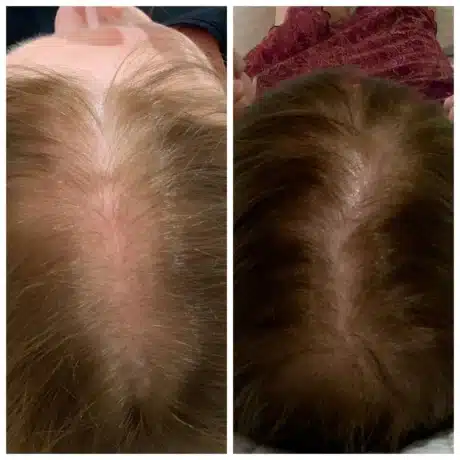
What Causes Hair Loss in Women?
- Androgenetic alopecia (female pattern hair loss)
- Postpartum shedding
- Menopause
- Thyroid or iron deficiencies
- Crash dieting or medication side effects
- Stress or inflammatory scalp conditions
It’s crucial to understand the type of hair loss before beginning any treatment. That’s why SF Aesthetics begins with a full consultation.
The Skinny Jab, Rapid Weight Loss & Hair Loss
Medications like Ozempic or semaglutide, often called the “Skinny Jab,” can help with weight management. However, losing weight quickly is known to cause hair loss. This occurs because:
- The body prioritises vital organs over hair follicle nutrition.
- Nutrient deficiencies develop during rapid fat loss.
- Hormonal shifts impact the growth cycle.
We’re seeing more clients reporting hair thinning after extended use of weight-loss injections. The good news? Treatments like PRP and exosomes can help support recovery and regrowth.
PRP or Exosomes Microneedled Into the Scalp – Tailored Hair Regrowth
At SF Aesthetics in Wigan, we provide two advanced treatments for female hair loss. These are Platelet-Rich Plasma (PRP) and Exosome Therapy. We use each treatment based on your hair loss pattern and scalp condition.
Both treatments are microneedled into the scalp. This helps with delivery and activates the follicles. Your practitioner will recommend either PRP or exosomes during your consultation, but not both at the same time.
PRP (Platelet-Rich Plasma) for Hair Loss
Doctors derive PRP from your own blood, concentrate it with growth factors, and use it to stimulate dormant hair follicles and improve scalp health.
- Ideal for women experiencing early thinning or shedding
- Drug-free and natural
- Reduces inflammation and promotes healthier regrowth
Exosome Therapy for Hair Loss
Exosomes are cell-derived messengers packed with proteins, RNA, and growth signals. When microneedled into the scalp, they help regenerate follicular function and support tissue repair.
- Ideal for more advanced thinning or hair weakened by inflammation or hormonal imbalance
- No blood draw required
- Often chosen when PRP is not suitable or desired
Why Microneedling?
Microneedling creates microchannels in the scalp, allowing either treatment to penetrate deeply, improving absorption and triggering collagen production to support follicle rejuvenation.
Your treatment is never one-size-fits-all. After checking your scalp health, hair density, and other factors like weight loss, PCOS, or menopause, we will suggest the best treatment. This could be PRP or exosomes, giving you the best chance for hair regrowth.
Our method uses microneedling, PRP, and exosomes. This approach targets the causes of hair loss. It works on both biological and structural issues. Plus, it does not require medications or downtime.
Case Study: Menopausal Hair Loss Treated with PRP
Client: Jane, 54, peri-menopausal woman from Wigan
Presenting Concerns: Jane came to us struggling with diffuse thinning at the crown and temples. She had always had fine hair, but over the past 18 months she noticed increased shedding, a visible scalp under certain lighting, and a significant drop in volume.
Root Cause: After a thorough consultation, we identified a combination of:
- Menopausal hormone changes (decline in oestrogen and progesterone)
- Family history of female pattern baldness
- Stress from caring for elderly parents
Treatment Plan:
- Three sessions of PRP therapy, spaced four weeks apart
- Microneedling during each PRP session to improve absorption
- Homecare support with:
- Growth factor peptide shampoo
- Scalp stimulating serum
- Dermaroller (twice weekly)
- Iron and biotin supplements
Results: By month three, Jane reported reduced shedding and new baby hairs along her parting. By month six, her hair felt noticeably denser, and her confidence returned. Scalp photos confirmed increased density in treated areas.

Jane’s Words:
“I didn’t expect miracles, but I feel like myself again. My hair isn’t perfect, but it’s mine and it’s growing.”
Why Menopausal Women Lose Hair
As oestrogen and progesterone levels decline during menopause, their protective effect on hair weakens. Meanwhile, androgens (male hormones) remain active. This hormonal imbalance leads to:
- Shorter growth (anagen) phase
- Follicle miniaturisation (smaller, finer hairs)
- Increased shedding
Other factors include slower cell turnover, decreased collagen, and reduced scalp blood flow. These biological changes make it harder for hair to regrow on the scalp. This can be improved with treatments like PRP or exosomes.
What Results Can You Expect?
While results vary, most clients experience:
- Noticeable reduction in shedding by 4–6 weeks
- New hair growth starting around 8–12 weeks
- Increased thickness and volume over 3–6 months
We always stress that consistency is key. Hair restoration is not instant—but with the right treatment plan, it is possible.
Who This Is Right For
You may be a good candidate for PRP or exosomes if you:
- Are experiencing thinning around the part, temples, or crown
- Have been recently menopausal or perimenopausal
- Are recovering from weight loss or hormonal treatment
- Have ruled out underlying medical conditions
- Prefer a natural, non-surgical approach
Results You Can See and Feel
With either of our hair loss treatments patients typically begin noticing:
- Reduced shedding in 4–6 weeks
- Thicker texture by 8–12 weeks
- Visible regrowth within 3–6 months with ongoing sessions
We customise your treatment plan depending on severity, cause, and response to treatment.
Female Hair Loss Treatment in Wigan – Why Choose SF Aesthetics?
- Medically trained, aesthetics-led practitioners
- Scientific approach to regenerative treatments
- Tailored plans that treat the root cause
- Supportive and discreet care
Book Your Female Hair Loss Consultation in Wigan
If you’re experiencing hair thinning, bald spots, or excessive shedding don’t wait. Early treatment means better results.
What is the best treatment for female hair loss?
The best treatment for female hair loss depends on the cause, hair loss stage, and your overall health. At SF Aesthetics, we offer Platelet-Rich Plasma (PRP) or Exosome Therapy, microneedled directly into the scalp to stimulate dormant follicles and improve scalp health. Both treatments are non-surgical, minimally invasive, and customised to each patient after a full consultation.
How can I stop my hair falling out as a female?
First, it’s important to identify the underlying cause. This could be hormonal changes, stress, nutrient deficiencies, or genetic predisposition. Early intervention is key. Professional female hair loss treatment combined with a healthy diet, stress management, and targeted homecare (such as peptide serums or growth-stimulating shampoos) can help reduce shedding and protect existing hair.
Can you regrow lost hair as a female?
Yes! If the hair follicles are still active. PRP or exosome therapy can reactivate dormant follicles, increase hair density, and improve thickness. The sooner treatment begins, the better the results. In cases of long-term follicle damage, regrowth may be limited, but treatments can still improve scalp health and slow further loss.
How I cured my hair loss as a female?
While “cure” isn’t always the right term because many forms of female hair loss are ongoing conditions, many women successfully manage and reverse thinning through early treatment. Our patients often combine in-clinic therapies like PRP or exosomes with medical-grade homecare products, nutritional support, and lifestyle changes, achieving long-term improvement in hair density and confidence.


